
Midjourney v7 Photorealism Masterclass: Camera Codes, Lighting, Skin Texture & ChatGPT vs Gemini Prompts
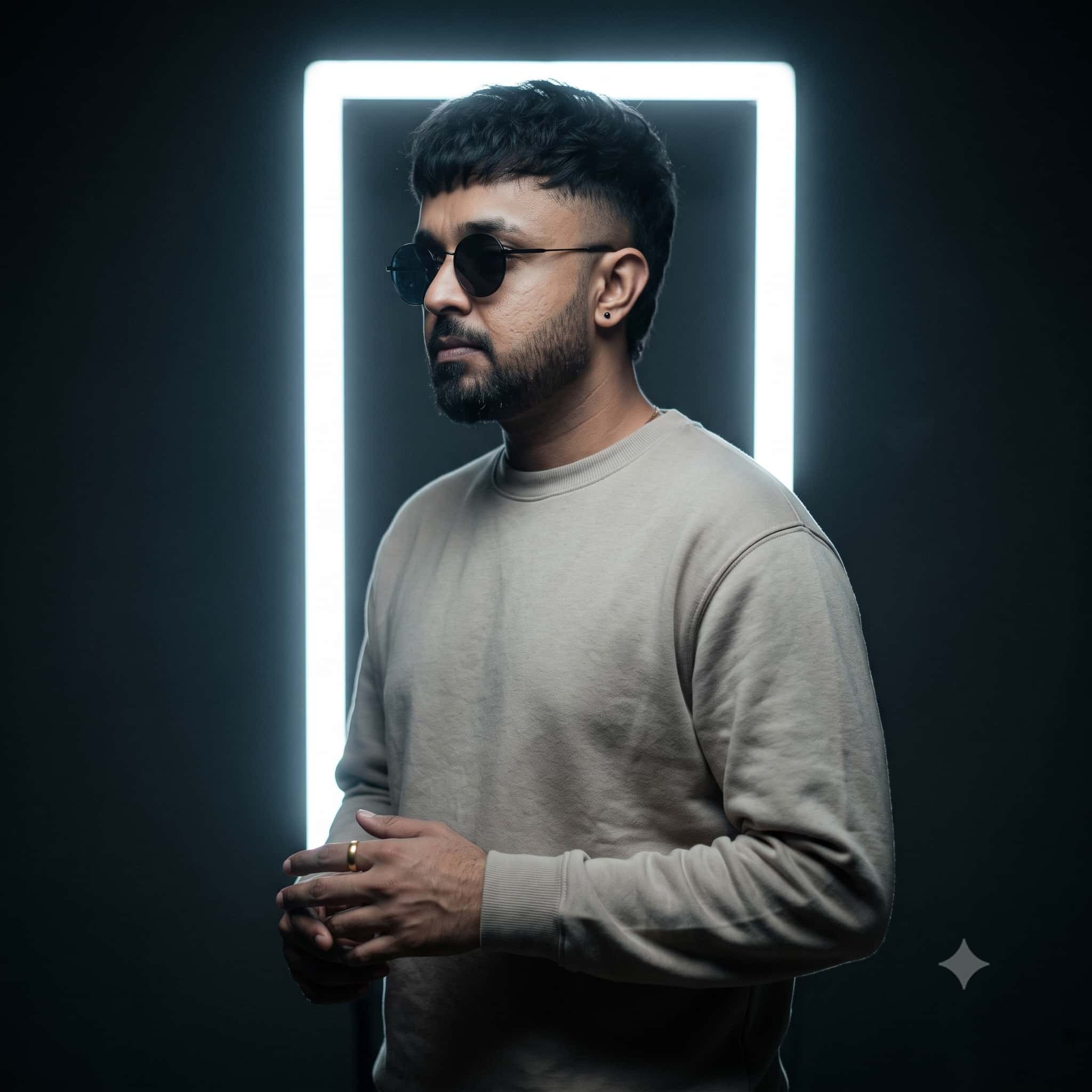
The biggest telltale sign of an amateur AI image has always been the "wax mannequin effect": overly smooth porcelain skin, lifeless glassy eyes, artificial symmetry, and digital blur that screams "computer generated".
In 2026, generative vision models like Midjourney v7, Flux.1 Pro, and Google Imagen 3 have cracked optical physics. By replacing generic fluff keywords with real-world cinematography parameters, professional camera hardware, lighting ratios, and analog film stocks, you can produce portraits indistinguishable from high-end Vanity Fair or National Geographic cover photography.
📷 The Optical Camera Hardware Cheat Sheet
AI diffusion models were trained on billions of real photographs tagged with professional EXIF metadata. When you instruct the model with specific camera bodies and high-end prime lenses, it immediately mimics the exact depth of field, chromatic aberration, and sensor rendering characteristics of that equipment:
| Camera / Lens Setup | Optical Aesthetic | Best Application |
|---|---|---|
| Sony A7R V + 85mm f/1.4 GM | Razor-sharp eye lashes, creamy circular bokeh, zero facial distortion | #1 Choice for High-Fashion Editorial |
| Hasselblad X2D 100C + 100mm f/2.5 | Medium-format dynamic range, deep micro-contrast, 16-bit color depth | Luxury Studio & Commercial Headshots |
| Leica M11 + 35mm Summilux f/1.4 | Organic street documentary feel, subtle vignette, intimate framing | Environmental Portraits & Candid Street |
| Canon EOS R5 + 100mm f/2.8L Macro | Extreme microscopic detail: iris patterns, individual water droplets, skin pores | Beauty Close-ups & Cosmetic Advertising |
Intimate portrait of a 29-year-old Scandinavian architect in a dark cashmere turtleneck, shot on Sony A7R V with 85mm f/1.4 GM lens, shallow depth of field, focused sharply on the iris with realistic corneal light reflections, soft natural skin pores with authentic micro-freckles, muted studio background blur, 8k resolution.
🔬 The Human Skin Physics: Subsurface Scattering & Micro-Pores
Real human skin is not an opaque plastic shield; it is a translucent living organ that absorbs, scatters, and re-emits light. In photography and 3D graphics, this physical phenomenon is called Subsurface Scattering (SSS).
To force Midjourney v7 or Google Imagen 3 to calculate physical skin lighting accurately, always weave these three critical texture anchors into your prompts:
- Authentic Subsurface Scattering: Causes ears, nose tips, and cheekbones to have a natural warm red/amber glow when backlit.
- Unaltered Micro-Texture: Triggers natural skin sebum, fine epidermal pores, delicate laugh lines, and fine peach fuzz (vellus hair) along the jawline.
- Analog Film Emulation: Tagging
Kodak Portra 400orFujifilm Superiaintroduces organic film grain that breaks up digital pixel gradients.
Raw candid side profile of a 24-year-old woman in golden afternoon sunlight, sun backlighting her ear cartilage with vivid red subsurface scattering, natural unretouched skin texture with visible pores and fine peach fuzz along the cheek, Kodak Portra 400 35mm film stock, organic grain, warm analog color grading.
⚔️ ChatGPT vs Google Gemini: The Visual Prompt Generator Shootout
Most creators use Large Language Models (LLMs) to write their Midjourney or Flux prompts. But how do ChatGPT-4o and Google Gemini differ when tasked with crafting prompt descriptions? We ran head-to-head experiments across four visual categories:
| Evaluation Dimension | ChatGPT-4o Prompt Style | Google Gemini Prompt Style | Winner |
|---|---|---|---|
| 1. Camera Optics & Hardware | Focuses on narrative and emotional mood; sometimes forgets exact lens apertures. | Meticulously cites precise focal lengths (85mm f/1.4), ISO values, and shutter speeds. | Google Gemini |
| 2. Fashion Styling & Mood | Exquisite descriptions of haute couture textiles, draping fabrics, and poetic ambiance. | Clean, direct, and utilitarian styling descriptions. | ChatGPT-4o |
| 3. Lighting Physics & Shadows | Descriptive adjectives (ethereal, moody, enchanting, radiant). | Physical light behavior (subsurface scattering, 45-degree key light, softbox fill). | Google Gemini |
| 4. Prompt Conciseness for Flux/Midjourney | Verbose paragraphs requiring manual editing to remove conversational filler. | Direct, dense, and structured token strings ready for instant copy-pasting. | Google Gemini |
🥊 Direct Prompt Comparison: "Cyberpunk Rainy Street Portrait"
A brooding cyberpunk detective wearing a weathered leather trench coat, standing beneath flickering neon signs in an alley drenched in rain. Neon magenta and cerulean hues shimmer across the wet asphalt. His face is illuminated by a faint holographic cigarette ember, capturing deep emotional weariness and raindrops running down his jawline.
Medium close-up portrait of a 35-year-old man in a wet distressed trench coat, Shinjuku alley at night, shot on Leica M11 with 35mm Summilux f/1.4 lens, CineStill 800T film stock with red halation glow around neon lights, authentic wet skin texture, water droplets clinging to eyelashes, sharp optical focus, f/1.8 depth of field.
🏆 The Verdict: Which Prompt Wins in Midjourney & Flux?
Google Gemini's formula produces cleaner, sharper photorealism because it specifies exact optical hardware (Leica M11, CineStill 800T, f/1.8) which modern diffusion models prioritize. ChatGPT's prompt produces wonderful narrative mood, but can sometimes yield overly dramatic, painterly lighting unless constrained with optical hardware tokens.
💎 More High-Fashion & Editorial Master Prompts
Vogue cover beauty portrait of an East Asian model wearing sculptural emerald silk earrings, studio lighting with a large Profoto octabox creating gentle catchlights in the dark eyes, flawless porcelain skin with natural micro-pores and subtle lip moisture, Hasselblad X2D 100C with 100mm f/2.5 lens, neutral grey studio backdrop, 8k.
National Geographic portrait of an 80-year-old fisherman in Brittany, weathered sun-worn skin with deep authentic crow's feet and silver stubble, piercing ocean-blue eyes filled with wisdom, soft overcast maritime diffused daylight, shot on Canon EOS R5 with 85mm f/1.8 lens, rugged wool sailor cap, authentic documentary texture, 8k.
Frequently Asked Questions (FAQ)
Why should I stop using words like "photorealistic" or "hyperrealistic"?
In 2026, modern AI models associate terms like "hyperrealistic, trending on ArtStation, 8k Unreal Engine" with 3D digital renders and video game graphics. Real photographs do not have those tags; they have camera hardware tags like "Sony A7R V, 85mm f/1.4, Kodak Portra".
How do I get sharp eyes in AI portraits every time?
Include "catchlights in the pupils, sharp corneal reflections, visible iris fiber patterns, optical focus on eyes" in your prompt. This instructs the diffusion attention layers to allocate high sampling density to the eye region.
Does Midjourney v7 support negative prompts?
Yes, using the --no flag. For portraits, appending --no plastic, airbrushed, cartoon, oversaturated, deformed eyes, extra fingers helps maintain clean organic textures.
Related AI Prompting Guides
Build Photorealistic Camera Prompts With 1 Click
Use our Free Prompt Builder to dial in optical camera bodies, prime lenses, film stocks, and lighting setups with zero guesswork.
Open AI Prompt Builder Free